
When people hear “kindergarten readiness,” they often jump straight to letters and numbers. But in early childhood, writing readiness is built long before a child forms neat letters. It starts with something simpler (and more important): fine motor skills—the small-muscle coordination that helps children use their hands with control and confidence.
At Little Planet Preschool in Winchester, we think about fine motor development the same way we think about all learning: children do best when it’s active, playful, and connected to real life. Here’s what fine motor skills actually are, why they matter, and how you can support them at home—without turning childhood into worksheets.
What are fine motor skills (and why do they matter in preschool)?
Fine motor skills are the coordinated movements of the hands and fingers—especially when children:
-
pick up and manipulate small objects
-
use tools (crayons, markers, scissors, paintbrushes)
-
button, zip, and open containers
-
build, pinch, twist, squeeze, and thread
These skills matter because they directly support:
-
independence (dressing, eating, self-care)
-
confidence (“I can do it myself!”)
-
pre-writing control (holding and guiding a crayon/pencil)
-
attention and persistence (staying with a task through small challenges)
In other words: fine motor skills aren’t just “hand skills.” They’re a foundation for school success and daily life.
“Big movement” helps “small movement”: the hidden connection
A common surprise for parents: strong fine motor skills aren’t built only at a table. They’re supported by the body’s larger systems—posture, shoulder stability, core strength, and coordination.
That’s one reason movement-rich, play-based environments matter. When children climb, crawl, balance, throw, dance, and build, they’re strengthening the stability that makes controlled hand movements easier later.
Think of it like this:
Hands work best when the body is organized.
A stable shoulder and core make it easier for the fingers to do precise work.
So if your child “won’t color” or “can’t use scissors yet,” it’s not always a hand problem. Sometimes the missing piece is whole-body development—and that grows through movement.
What fine motor progress can look like (ages 3–5)
Children develop at different rates, but in the preschool years you often see growth in:
-
drawing basic shapes (circles, lines, crosses)
-
using child-safe scissors (snipping → cutting)
-
building with small blocks or interlocking pieces
-
threading beads or lacing
-
opening lunch containers with less frustration
-
beginning to copy simple forms or letters (when ready)
The key idea: we want progress, not perfection. A child doesn’t need “beautiful handwriting” at four. They need control, strength, and willingness to try.
12 play-based fine motor activities you can do at home
None of these require fancy materials. Most use what you already have.
1) Sticker “pinch and place”
Have your child peel small stickers and place them on drawn targets (dots, circles, simple shapes). This builds pinch strength and control.
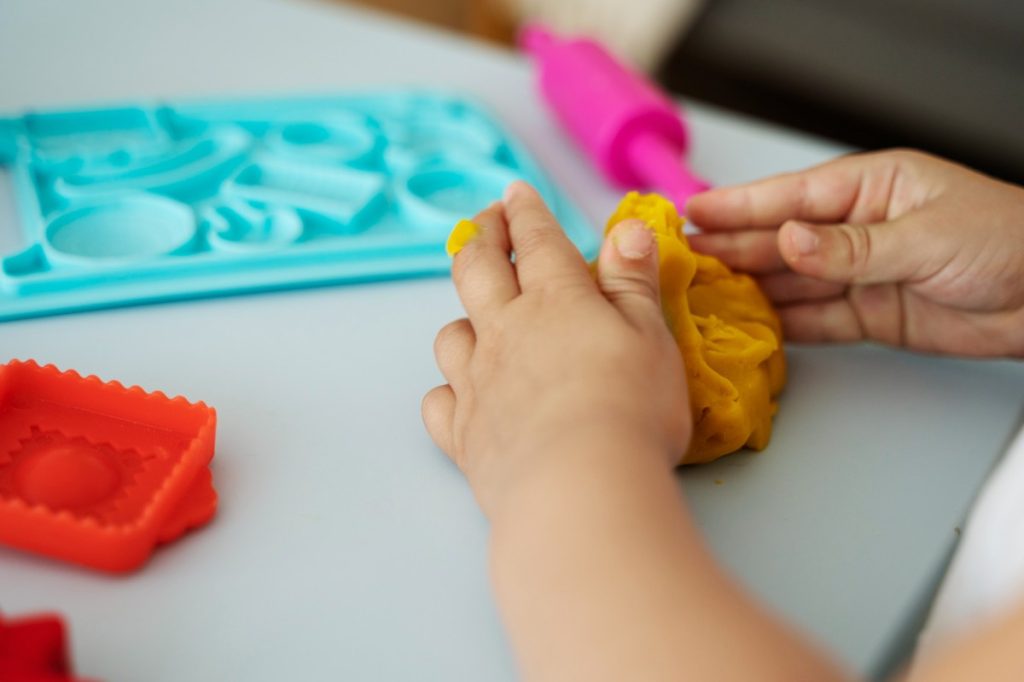
2) Playdough “hand gym”
Roll snakes, pinch spikes, flatten pancakes, cut with a dull plastic knife, hide small objects and “rescue” them.
3) Clothespin games
Clip clothespins onto a container edge, a cardboard “hedgehog,” or around a paper plate “sun.”
4) Tweezer transfers
Use kitchen tongs or kid tweezers to move pom-poms or cotton balls from one bowl to another.
5) Bead threading (start big)
Start with large beads and a stiff lace. Progress to smaller beads as frustration tolerance improves.
6) Pipe-cleaner “threading stations”
Poke holes into a box or colander and have your child thread pipe cleaners through.
7) Paper tearing + collage
Tearing paper strengthens hands and develops bilateral coordination (both hands working together). Glue the pieces into a collage.
8) Scissor “snip strips”
Before cutting shapes, practice snipping thick paper strips. Success feels fast and builds confidence.
9) Sponge squeeze art
Dip small sponges in paint and squeeze/press onto paper. Great for hand strength.
10) Dot markers and stampers
Dot markers encourage controlled pressing without demanding a perfect grip.
11) LEGO / small construction challenges
Try “build a bridge” or “build a tall tower” prompts to add attention and planning to handwork.
12) Everyday “practical life” jobs
Let your child help with real tasks:
-
stirring thicker batters
-
peeling mandarins
-
opening containers
-
sorting coins/buttons (with supervision)
-
using a spray bottle to water plants
Real life is an underrated fine motor curriculum.
A simple weekly routine (10 minutes a day)
If you want consistency without stress:
-
Mon: playdough + hidden objects
-
Tue: stickers + dot markers
-
Wed: tweezers/tongs transfer game
-
Thu: tearing + glue collage
-
Fri: scissor snips + “cut the road” (simple lines)
-
Weekend: practical life help (cooking, sorting, watering plants)
Short, playful, repeatable. That’s how skills stick.
When to worry (and when not to)
It’s normal for children to avoid difficult tasks sometimes—especially if they’ve had recent growth spurts, changes in routine, or big feelings.
But consider asking your pediatrician or an early childhood professional if you notice patterns like:
-
persistent extreme frustration with any hand task
-
refusal to use utensils or crayons over many months
-
very weak grip or rapid fatigue
-
skills that seem to be regressing (used to do something, now can’t)
Most of the time, children just need more playful practice and patient support. But it’s always okay to ask questions early.
How a play-based preschool supports fine motor growth
In a high-quality preschool environment, fine motor skill building happens naturally through:
-
art stations (painting, cutting, gluing, collage)
-
sensory materials (clay, sand tools, scoops, pouring)
-
building and construction play
-
puzzles, lacing, and manipulatives
-
self-care routines (zipping coats, opening lunch items, handwashing)
The goal isn’t to push early academics too soon. The goal is to help children become capable, confident, and ready—with hands that can do what their minds imagine.
Looking for a preschool in Winchester, MA?
If you’re exploring preschool options in Winchester and you want a program that values movement, play, and whole-child development, we’d love to meet your family. Little Planet Preschool’s mission—Learning to Move…Moving to Learn—supports growth across physical, social, and cognitive development in a warm, nurturing setting.
