
Choosing a preschool can feel surprisingly urgent. One day your child is still a toddler, and the next day you are hearing other parents talk about applications, waitlists, tours, deposits, and “spots” for the next school year.
If you are searching for preschool enrollment in Winchester, MA, the best advice is simple: start earlier than you think, especially if you want a specific schedule, a full-day program, or a preschool close to home or work.
Preschool is not only about finding an open seat. It is about finding the right daily environment for your child: a place where they feel safe, known, encouraged, and ready to grow socially, emotionally, physically, and academically.
This guide explains when to begin your search, what a realistic enrollment timeline looks like, how preschool waitlists work in Massachusetts, and what Winchester-area families should ask before choosing a program.
When Should Parents Start Looking for Preschool?
For most families, the best time to start looking for preschool is 9 to 12 months before you want your child to begin.
If you are hoping for a fall start, begin researching programs the previous fall or winter. For example, if you want your child to begin preschool in September, you should ideally begin looking between the previous September and January.
That may sound early, but preschool decisions often involve several steps:
- Researching local programs
- Understanding age requirements
- Comparing full-day, half-day, and part-time options
- Scheduling tours
- Asking about openings
- Joining a waitlist if needed
- Completing registration paperwork
- Preparing your child for the transition
For Winchester families, it is especially wise to begin early because many parents are comparing several types of options at the same time: private preschool, public preschool, childcare centers, part-time programs, full-day programs, and Pre-K readiness programs.
The earlier you begin, the more choice you usually have.
A Practical Preschool Enrollment Timeline for Winchester, MA Families
Every preschool has its own process, but this general timeline can help you plan ahead.
12–18 Months Before Your Desired Start Date: Begin Light Research
At this stage, you do not need to make a final decision. Your goal is simply to understand what is available.
Start by asking:
- Do we need full-day care or part-time preschool?
- Do we need a year-round program?
- What drop-off and pick-up times work for our family?
- Do we prefer a play-based, academic, movement-based, Montessori-inspired, or mixed approach?
- Is location more important near home, work, or a commuting route?
- Does our child need extra support with separation, toileting, language, social confidence, or routine?
This is also a good time to make a short list of programs in and near Winchester.
Do not rely only on reviews. Reviews can help, but preschool is deeply personal. A school that is perfect for one child may not be the best fit for another. Look at the daily rhythm, teacher warmth, classroom environment, movement opportunities, safety practices, communication style, and the overall feeling of the place.
9–12 Months Before: Schedule Tours
This is the most important window for families who want options.
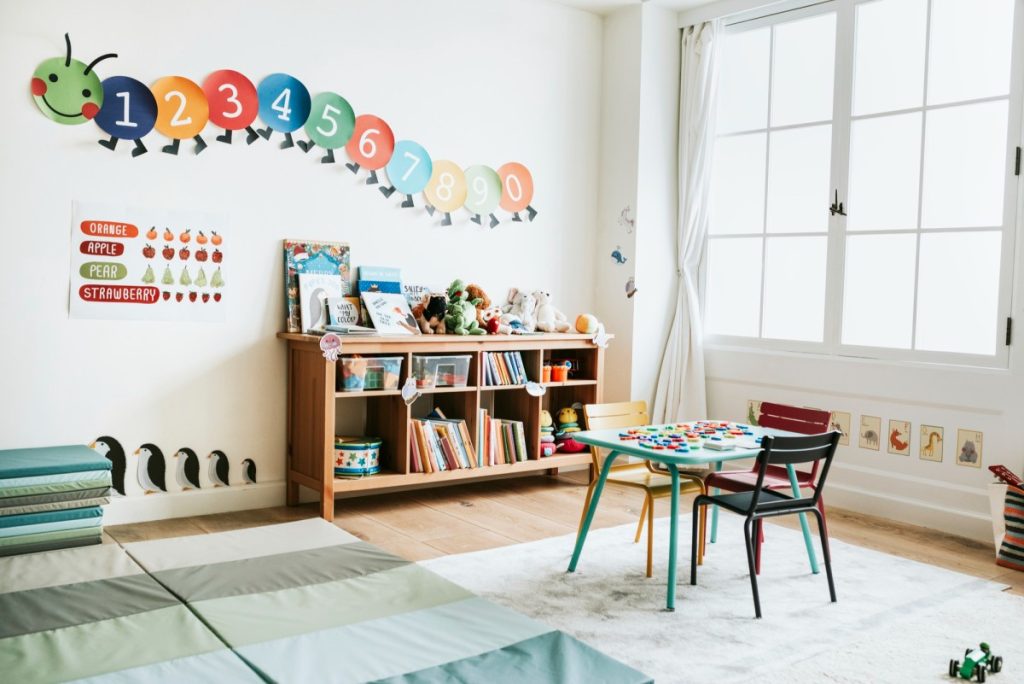
A tour gives you information that a website cannot. You can see how teachers speak to children, how classrooms are arranged, whether the atmosphere feels calm or chaotic, how children move through the day, and whether the program’s philosophy matches your child’s personality.
During a preschool tour, pay attention to:
- Whether children seem comfortable and engaged
- Whether teachers get down to the child’s level
- Whether the classroom has varied learning centers
- Whether children have opportunities to move, play, explore, build, talk, and create
- Whether the schedule feels developmentally appropriate
- Whether the program supports both independence and emotional security
- Whether communication with parents is clear and consistent
For children ages 3 to 5, learning is not only sitting at a table. Strong preschool programs support social-emotional growth, language, early literacy, early math, science exploration, motor development, creative expression, and practical independence.
A good preschool should help your child become more confident in the world.
6–9 Months Before: Ask About Openings, Schedules, and Waitlists
After touring, narrow your list to the programs that feel like real possibilities.
Then ask direct enrollment questions:
- Are you currently enrolling for my child’s age group?
- Do you have openings for full-day or part-time schedules?
- Is enrollment rolling or tied to the school year?
- Do you maintain a waitlist?
- Is there a deposit or registration fee?
- What forms are needed before my child can begin?
- What happens if my preferred schedule is not available?
- Can families switch schedules later if a spot opens?
This is also the stage where you should ask about the difference between a general inquiry list and a true waitlist.
Some programs may say, “We will contact you if something opens.” Others may have a formal waitlist process with paperwork or priority rules. These are not the same thing. Always ask what you need to do to be considered for an opening.
3–6 Months Before: Complete Enrollment Steps
Once you choose a preschool, do not wait too long to finish paperwork.
Common enrollment steps may include:
- Registration form
- Emergency contact information
- Health and immunization records
- Allergy or medication forms, if applicable
- Deposit or tuition agreement
- Schedule selection
- Parent handbook review
- Transition or orientation details
If your child has allergies, medical needs, toileting needs, sensory sensitivities, or separation anxiety, this is the time to communicate clearly with the school. A good preschool will want to understand your child before the first day.
Do not treat these details as “problems.” They are simply part of helping teachers know your child well.
1–3 Months Before: Prepare Your Child for the Transition
Preschool is a major developmental step. Even confident children may need time to adjust.
In the weeks before school begins, help your child practice:
- Saying goodbye and reuniting
- Using the bathroom independently, if developmentally ready
- Washing hands
- Opening lunch containers
- Asking an adult for help
- Cleaning up toys
- Sitting briefly for a story or group activity
- Following simple routines
- Playing near other children
You can also talk about preschool in a calm, positive way:
“You will have teachers who help you.”
“You will play, learn, move, and make friends.”
“I will say goodbye, and I will come back after school.”
Avoid over-promising that your child will love every moment right away. It is better to present preschool as a safe new routine that they will learn step by step.
What About Preschool Waitlists in Massachusetts?
Preschool waitlists in Massachusetts can mean different things depending on the type of program.
A private preschool or childcare center may maintain its own internal waitlist. A public preschool program may use an application or lottery process. State child care financial assistance has its own separate process and may involve a centralized waitlist.
That is why parents should always ask: “What kind of waitlist is this?”
Here are the most important things to know.
1. A Waitlist Does Not Always Mean the Same Thing Everywhere
Some waitlists are organized by application date. Others may depend on age group, classroom availability, sibling priority, schedule type, or whether a family needs full-time care.
A program might have an opening for a 4-year-old but not for a 3-year-old. Or it may have a part-time opening but not a full-day opening. This is why it is helpful to be clear about your flexibility.
If you can consider more than one schedule, tell the school. Flexibility can sometimes make enrollment easier.
2. Full-Day Preschool Spots Can Be More Competitive
For working families, full-day preschool is often the most practical option. But because full-day care supports both early education and family scheduling needs, those spots may fill sooner.
If you know you need full-day preschool, do not wait until late spring or summer to begin the process. Start in the fall or winter before your desired start date.
Families who need early drop-off, later pick-up, or year-round care should be especially proactive.
3. Age Group Matters
Preschool classrooms are often organized by age and developmental stage. This means availability can change depending on whether your child is 2.9, 3, 4, or approaching kindergarten.
When you contact a preschool, include your child’s birthdate and desired start date. That allows the program to tell you more accurately which classroom or age group may be appropriate.
4. Stay in Touch Without Overdoing It
If you are placed on a waitlist, ask how and when to follow up.
A reasonable approach is to check in every few months or when your needs change. For example, if you become open to a different schedule, or if your desired start date changes, let the program know.
A short, polite update is usually enough:
“Hi, we are still very interested in your preschool program for our child. We are hoping for a fall start, but we may also be open to an earlier opening if one becomes available.”
This keeps your family on the program’s radar without overwhelming the admissions process.
What Winchester Parents Should Consider Before Choosing a Preschool
Enrollment timing matters, but fit matters more.
Before choosing a preschool in Winchester, consider these factors carefully.
Schedule and Family Logistics
Ask whether the program fits your real life.
- What are the daily hours?
- Is the program school-year only or year-round?
- What holidays or breaks does the school observe?
- Are full-day and half-day options available?
- How does drop-off and pick-up work?
- What happens during snow days or unexpected closures?
A beautiful preschool may still be difficult if the schedule does not work for your family.
Learning Philosophy
Parents often ask whether preschool should be play-based or academic. The better question is: “How does this program help children learn through meaningful activity?”
Young children learn through movement, conversation, sensory experience, imitation, repetition, pretend play, stories, music, art, problem-solving, and relationships.
Look for a program that supports the whole child:
- Social-emotional development
- Language development
- Early literacy
- Early math
- Science and curiosity
- Creative expression
- Motor development
- Independence
- Confidence
A strong preschool does not force children to act like older students. It prepares them for kindergarten by building the developmental foundation they need.
Teacher Warmth and Communication
The teacher-child relationship is one of the most important parts of preschool.
During your tour, notice whether teachers seem patient, attentive, and emotionally present. Do they speak respectfully to children? Do they redirect gently? Do they encourage independence without shaming mistakes?
Also ask how the school communicates with parents:
- Will I receive daily updates?
- How are concerns shared?
- Are photos or reports provided?
- How do teachers communicate about naps, meals, toileting, behavior, and learning activities?
- Who should parents contact with questions?
Good parent communication reduces anxiety and builds trust.
Movement, Outdoor Play, and Gross Motor Development
In New England, children spend many months dealing with cold weather, snow, rain, and shorter daylight. That makes movement opportunities especially important.
Preschoolers need to move. Movement supports coordination, self-regulation, confidence, attention, and healthy physical development. A program that values active learning can be especially helpful for children who do not thrive by sitting still for long periods.
Ask:
- How much time do children spend moving each day?
- Do children have outdoor play when weather allows?
- Is there indoor gross motor space?
- Are movement activities part of the curriculum?
- How does the school help children regulate energy and emotions?
A preschool that understands movement is often better aligned with how young children naturally learn.
Kindergarten Readiness
For families with 4- and 5-year-olds, kindergarten readiness becomes a major concern.
Kindergarten readiness is not just knowing letters and numbers. It also includes:
- Separating from caregivers
- Following classroom routines
- Listening to a story
- Taking turns
- Asking for help
- Managing frustration
- Using words to solve problems
- Holding a pencil or crayon
- Participating in group activities
- Showing curiosity and persistence
In Winchester, children entering kindergarten must meet local age eligibility rules, so preschool can become an important bridge between early childhood and elementary school.
A strong Pre-K experience helps children enter kindergarten with confidence, not pressure.
Questions to Ask Before Joining a Preschool Waitlist
Before joining a waitlist, ask these questions:
- Is there currently availability for my child’s age group?
- How is your waitlist organized?
- Is there a fee to join the waitlist?
- Do families need to complete paperwork before being considered?
- Are full-day and part-time schedules managed separately?
- Do siblings or currently enrolled families receive priority?
- How often should I follow up?
- If a spot opens, how quickly do families need to decide?
- Can my child start mid-year if a space becomes available?
- What can we do now to prepare for enrollment?
These questions help you understand whether the waitlist is a realistic path or whether you should continue touring other programs.
A Simple Month-by-Month Timeline
Here is a practical planning timeline for Winchester-area parents.
September–October
Begin researching preschools. Make a list of programs near Winchester, your commute, and your home. Think about your ideal schedule and whether you need full-day, part-time, or year-round care.
November–January
Schedule tours. Ask about enrollment timing, classroom openings, waitlists, and age requirements. This is an especially important period if you are thinking about the following school year.
February–March
Narrow your choices. Follow up with preferred programs. Submit applications or registration forms if you are ready.
April–May
Confirm enrollment if offered a spot. Ask about transition visits, required forms, health records, classroom placement, and first-day routines.
June–August
Prepare your child gradually. Practice simple routines, talk about school positively, and adjust sleep, lunch, and goodbye routines if needed.
September or Desired Start Month
Begin preschool with patience. Some children adjust quickly, while others need several weeks. A thoughtful preschool will help your child build comfort gradually.
Final Advice: Start Early, But Choose Carefully
If you are looking for preschool in Winchester, MA, starting early gives your family more options. But the goal is not simply to get on every list. The goal is to find a school where your child can feel secure, active, curious, and known.
Begin your search 9 to 12 months ahead when possible. Tour more than one program. Ask direct questions about enrollment and waitlists. Pay close attention to teacher warmth, movement opportunities, communication, classroom environment, and developmental fit.
A good preschool should feel like more than childcare. It should feel like a small world where your child can practice becoming more independent, more confident, and more ready for the next stage of life.
FAQ
When should I start looking for preschool in Winchester, MA?
Ideally, start 9 to 12 months before your desired start date. If you want a fall start, begin researching and touring programs the previous fall or winter.
Do preschools in Massachusetts have waitlists?
Many do, but waitlists vary by program. Private preschools, public preschool programs, and state child care assistance programs may all have different waitlist processes.
Is full-day preschool harder to find?
Full-day preschool can be more competitive because it supports both early learning and working-family schedules. If you need full-day care, start your search early.
What should I ask during a preschool tour?
Ask about schedule, classroom size, teacher communication, daily routines, outdoor play, movement, safety, curriculum, toileting expectations, rest time, and how the school handles separation anxiety.
What matters most when choosing a preschool?
Look for warmth, safety, communication, developmental fit, active learning, social-emotional support, and a daily routine that matches your child and family.
Looking for Preschool in Winchester, MA?
Little Planet Preschool is located in Winchester, Massachusetts and offers a nurturing preschool and child development environment focused on active learning, play, movement, and whole-child growth.
Families interested in current openings, enrollment options, or scheduling a tour are welcome to contact Little Planet Preschool.
Schedule a Tour: https://littleplanetps.com/schedule-a-tour/
Contact: https://littleplanetps.com/contact/
Programs: https://littleplanetps.com/our-offerings/
